
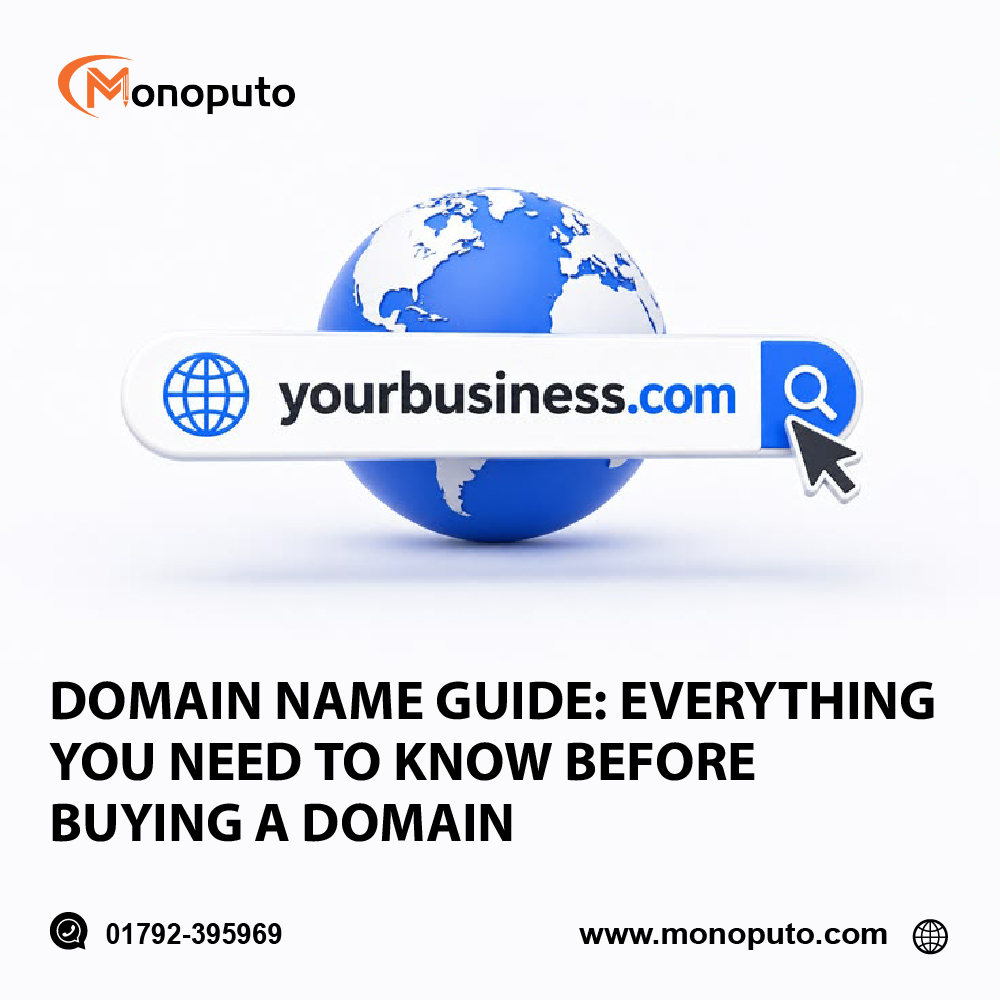
Choosing the right domain name is one of the first and most important decisions when building a successful online presence. Your domain is not just a web address—it is part of your brand identity and can appear on your website, business cards, social media profiles, advertisements, and professional email addresses.
A good domain name should be simple, memorable, professional, relevant, and easy to communicate. While a domain name alone does not guarantee higher Google rankings, choosing a clear and brandable name can make it easier for customers to recognize and find your business. Google recommends choosing a unique, concise site name that accurately represents the identity of your website.
Whether you are starting a new business, launching an e-commerce store, creating a personal brand, or taking an existing business online, choosing the right domain requires careful consideration.
What Is a Domain Name?
A domain name is the unique address people use to visit your website.
For example:
Instead of remembering a complicated IP address, customers can simply type your domain name into their browser to access your website.
Your domain can become one of the most recognizable parts of your digital identity. It connects your website with your brand and provides customers with a simple way to find you online.
Why Is a Good Domain Name Important?
A strong domain name can create a positive first impression and make your business easier to remember.
An effective domain should ideally be:
Easy to remember
Easy to spell
Easy to pronounce
Relevant to your business
Professional
Suitable for long-term growth
A well-chosen domain can also support your marketing activities by giving your business a consistent identity across different digital platforms.
Keep Your Domain Short and Simple
One of the most important rules when choosing a domain name is to keep it simple.
Long and complicated domains can be difficult to remember, type, and communicate. Avoid unnecessary words, confusing spellings, and excessive characters.
Before buying a domain, try saying it aloud to someone. If they can easily understand and spell it without asking questions, it is probably a good choice.
A simple domain is particularly useful for:
Business cards
Social media advertising
Television and radio advertising
Printed materials
Email marketing
Word-of-mouth referrals
Choose a Brandable Domain Name
Your domain should support your brand identity rather than simply contain a list of keywords.
A unique and recognizable name can help customers remember your business and distinguish you from competitors.
For example:
Business Name: Monoputo
Website: monoputo.com
Email: info@monoputo.com
This creates a consistent and professional brand experience.
Google recommends using a unique and concise site name that accurately represents your website.
Don't Choose a Domain Only for SEO
Many businesses believe that putting keywords into a domain automatically makes the website rank higher on Google. This is a common misconception.
Google's current SEO guidance says that keywords in a domain name or URL path, by themselves, have very little ranking effect beyond helping appear in certain URL or breadcrumb contexts. Google recommends choosing a site name based on what is best for your business and users.
Instead of forcing keywords into your domain, focus on building a recognizable brand and creating useful, relevant website content.
Your SEO strategy should include:
Quality content
Search intent
Technical SEO
Clear page titles
Descriptive URLs
Internal linking
Mobile-friendly design
Good website performance
Choose the Right Domain Extension
A domain extension is the part that appears after your business name.
Common examples include:
.com
.net
.org
.co
.bd
For many commercial businesses, .com is a familiar choice. Businesses primarily serving customers in Bangladesh may also consider a .bd domain.
However, don't choose an extension simply because you believe it will automatically improve SEO. Google states that the top-level domain generally has little ranking impact, with country-specific domains being more relevant when targeting a particular country.
Choose the extension that best fits your brand, audience, and business goals.
Avoid Unnecessary Numbers and Hyphens
Numbers and hyphens can sometimes make a domain difficult to communicate.
For example, if your domain contains a number, customers may wonder whether it should be written as a digit or as a word. Similarly, they may forget whether a hyphen is included.
Whenever possible, choose a clean domain without unnecessary numbers or hyphens.
Check the Name Before Buying
Before registering a domain, do some research.
Search the name on Google and social media platforms to see whether another company is already using it. You should also consider checking relevant trademark databases.
Look for:
Similar business names
Existing brands
Social media accounts
Trademark conflicts
Negative associations
Confusingly similar websites
An available domain does not automatically mean that the name is safe to use as a business brand. Researching the name before purchasing can help you avoid expensive problems later.
Think About Your Future Business Growth
Your business may change as it grows. You may introduce new products, offer additional services, or expand into new markets.
For this reason, avoid choosing a domain that is unnecessarily restrictive.
For example, if your business plans to offer several technology services in the future, choosing a domain that only describes one specific service may limit your brand.
Ask yourself:
"Will this domain still represent my business several years from now?"
If the answer is yes, you are more likely to have chosen a flexible domain.
Create Clear and SEO-Friendly URLs
Your main domain is only one part of your website's URL structure. Individual pages should also use clear and descriptive URLs.
For example:
Good:
monoputo.com/seo-services
Less useful:
monoputo.com/page?id=123
Descriptive URLs help visitors understand what a page is about and can provide useful context in Google Search. Google recommends using descriptive words in URLs rather than random identifiers.
Protect Your Domain
After purchasing your domain, protecting it is just as important as choosing it.
Use a strong password for your domain account and enable two-factor authentication where available. Keep your registration information up to date and consider enabling automatic renewal so that the domain does not accidentally expire.
Your domain may be connected to your:
Website
Business email
Online store
Marketing campaigns
Customer communications
Losing control of the domain can therefore cause significant disruption to your business.
Think Carefully Before Changing Your Domain
Once a domain becomes established, changing it can be complicated.
Your existing domain may already have customers, backlinks, search visibility, marketing materials, email addresses, and brand recognition associated with it.
If you eventually need to change your domain, the process should be carefully planned. Google recommends preparing URL mappings and redirects when moving a website to a new domain to help minimize potential negative effects on search visibility.
Why Choosing the Right Domain Matters
The right domain can help your business:
Build a recognizable brand
Create a professional online identity
Make your website easier to remember
Support digital marketing campaigns
Strengthen customer trust
Provide room for future business growth
Your domain may contain only a few words, but it can become one of the most valuable elements of your online brand.
Why Choose Monoputo?
At Monoputo, we provide professional digital solutions designed to help businesses establish, improve, and grow their online presence.
Our services include:
Domain Registration
Web Hosting
Website Development
SEO Services
Technical SEO
On-Page SEO
Local SEO
Digital Marketing
Whether you are purchasing your first domain, launching a new website, or improving an existing online business, our team can help you choose and implement the right digital solutions for your goals.
Frequently Asked Questions
What makes a good domain name?
A good domain name should be short, memorable, easy to spell, professional, brandable, and suitable for your long-term business goals.
Does a domain name improve SEO?
A domain name alone does not guarantee higher Google rankings. Google considers many aspects of a website, including its content, relevance, technical setup, and overall usefulness.
Should I include keywords in my domain?
You can include a relevant keyword if it naturally fits your brand, but you should not choose a complicated domain simply to target keywords. Google recommends choosing the name that is best for your business and users.
Is .com the best domain extension?
.com is a popular choice for businesses, but the best extension depends on your business, target audience, location, and branding strategy.
Can I change my domain later?
Yes, but changing a domain requires careful planning because it can affect website URLs, redirects, email, links, branding, and search visibility.
Buy Your Perfect Domain with Monoputo
Your domain name is the foundation of your online identity. Choosing the right one today can help your business build a stronger and more recognizable digital presence tomorrow.
Don't choose a domain simply because it contains a popular keyword. Choose a name that is memorable, professional, brandable, easy to communicate, and flexible enough to grow with your business.
At Monoputo, we can help you with everything from domain registration and web hosting to website development, SEO, and digital marketing.
Get Started Today!
📞 Call: +880 1792-395969
🌐 Website: www.monoputo.com
📧 Contact us today to find the right domain and digital solution for your business.
Monoputo – Empowering Businesses with Data-Driven Digital Solutions.


